

Direct answer: Choose a walk-in tub if the person loves a seated soak and can safely step over a few inches. Choose a roll-in shower if they use a wheelchair or cannot lift a foot, and a walk-in shower if a quick, simple routine matters most. When the family is unsure, an occupational therapist's home visit is the best tiebreaker.
Start with the person, not the product
Before talking about brands, picture an ordinary evening. Can the person stand for ten minutes? Do they use a walker or wheelchair? Do warm baths ease their joints, or do they prefer a quick rinse? Is someone helping them? The answers usually point clearly to one choice.
| Situation | Often a better fit | Why |
|---|---|---|
| Loves a deep soak, can step over a few inches | Walk-in tub | Seated, deep water without climbing a tub wall |
| Uses a wheelchair daily | Roll-in shower or transfer tub | No step at all, or a slide-over entry |
| Uses a walker, prefers showers | Walk-in shower with a seat | Low entry, room to set the walker close |
| Caregiver helps with bathing | Roll-in shower, or outward-door tub | Space for a second person to reach |
| Gets cold easily, wants warmth | Walk-in tub with heated seat or in-line heater | Body stays in warm water while seated |
| Needs to be in and out quickly | Walk-in shower | No waiting for fill and drain |
The trade-offs of a walk-in tub
A walk-in tub gives a seated soak with a low step and a door that seals. The trade-off is time: you get in before the water comes in and you stay seated until it drains out. In a Houston summer that can feel fine; on a January cold front, some people feel chilly while the tub fills or empties. Heated seats, in-line heaters and quick-drain systems are designed for that problem. A walk-in tub also needs a water heater that can fill it.
It still has a threshold. It is much lower than a standard tub wall, but it is not zero. For someone who shuffles or cannot lift a foot, even a few inches can be too much.
The trade-offs of a walk-in or roll-in shower
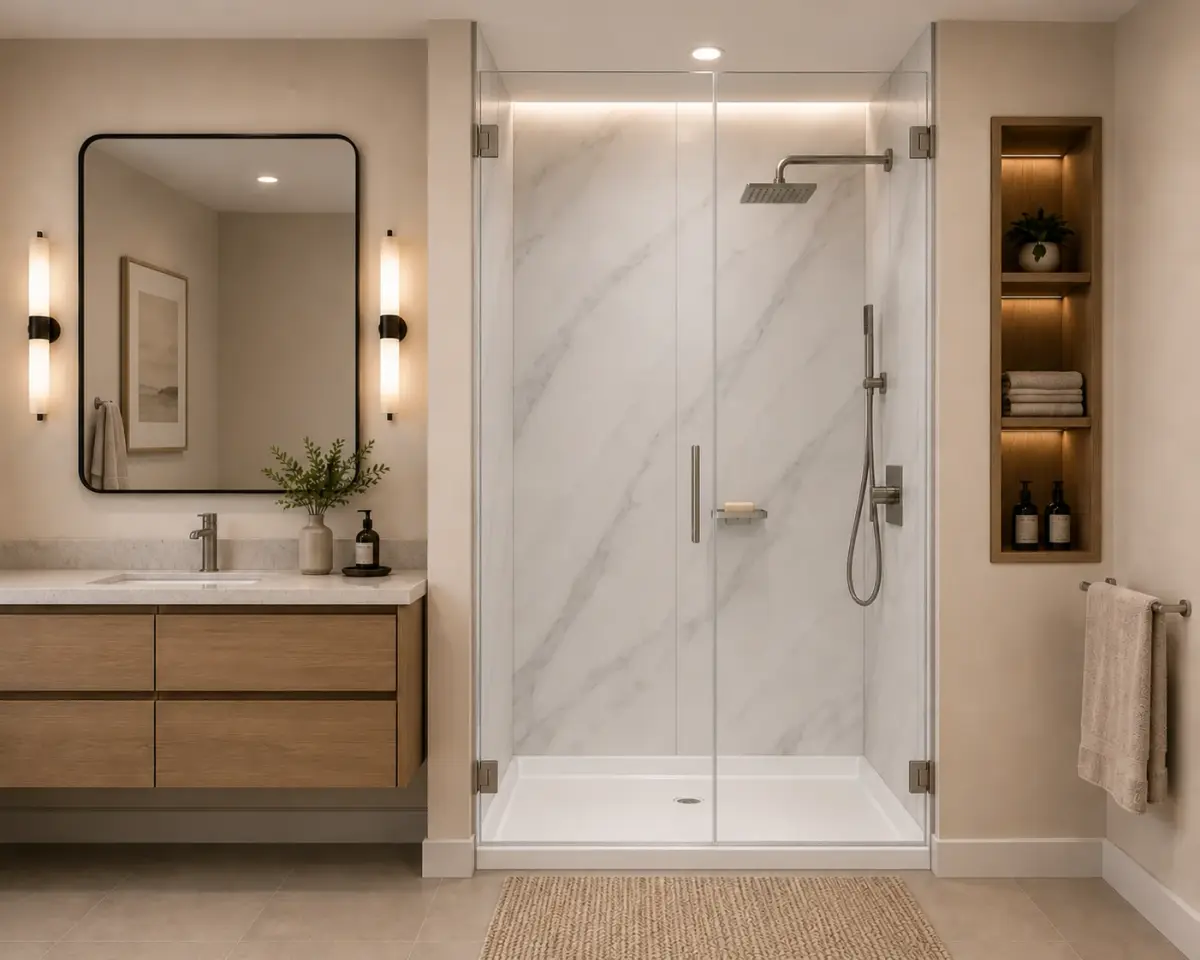
A walk-in shower has a low curb or a beveled entry. A roll-in shower has an entry built for wheels to cross, often with a collapsible water dam or a trench drain at the opening. Both let a person stand or sit on a fold-down seat with a handheld shower. There is no wait for water to fill, and a caregiver can reach in more easily.
What a shower cannot do is give a deep, warm soak. For some people with arthritis that matters a great deal. Showers also put more water on the floor if the slope and drain are not right, which is why good pan design matters in our humid climate.
If a roll-in shower is on the table, the roll-in shower guide from Aging Safely Baths covers pan sizes, thresholds and drain types in more depth.
Houston house questions that tip the decision
Is the bathroom a standard 5-foot alcove?
Many Houston hall baths built from the 1960s through the 1990s have a 60-inch tub alcove. Both a compact walk-in tub and a shower pan sized for that alcove can fit. Larger primary baths with a garden tub give more options, including a roomier roll-in shower.
Can the slab handle a drain change?
A shower drain sits in a different spot than a tub drain. Converting a tub to a shower on a slab may mean cutting concrete to move the drain, or choosing a pan whose drain location matches. A trench drain can sometimes simplify the layout.
How big is the water heater?
A shower uses hot water steadily. A walk-in tub asks for a lot at once. If your heater is small and you want a tub, plan for that in the quote.
Will someone else need the room?
If a spouse wants to keep using a regular tub, think about which bathroom gets which change. In a two-bath house, many families put a walk-in tub or shower in one and leave the other as it is.
A quick way to decide
- If the person needs no step at all, start with a roll-in shower or a transfer tub.
- If soaking is the point and stepping a few inches is safe, start with a walk-in tub.
- If speed and simplicity matter most, start with a walk-in shower.
- If you are unsure, ask an occupational therapist for a home safety evaluation. We are glad to work from their notes.
On our home page you can explore an interactive roll-in shower model, and our buying guide goes deeper on tub sizes and doors.
Questions we hear about this
Is a walk-in tub or a walk-in shower safer?
Neither is safe for everyone. A shower has a lower entry and no waiting, while a walk-in tub offers seated bathing in deep water. The right choice depends on how the person moves; an occupational therapist can help decide.
Can a walk-in shower fit where my tub is now?
Usually. Shower pans are made to fit standard 60-inch tub alcoves. On a slab, check whether the drain location matches or needs to move.
Do walk-in tubs work for wheelchair users?
A standard walk-in tub still requires a small step. Wheelchair users often do better with a roll-in shower or a transfer tub with a wide outward door and slide-over seat.
Sources
- National Institute on Aging: Preventing falls at home, room by room
- CDC: Older adult falls, facts and statistics
Program rules and figures can change. Check the linked agency page before you rely on them.